GIZ Ghana — Make Fashion Inclusive Project
Nov 2024 – Nov 2025
Training of 100 Persons with Disability (PWDs) and vulnerable youth in fashion skills and establishment of a fashion hub in Kumasi.
Completed
A 12-month partnership with GIZ (November 2024 – November 2025) equipping persons with disabilities and vulnerable youth in Kumasi with market-driven fashion, entrepreneurship and life skills.
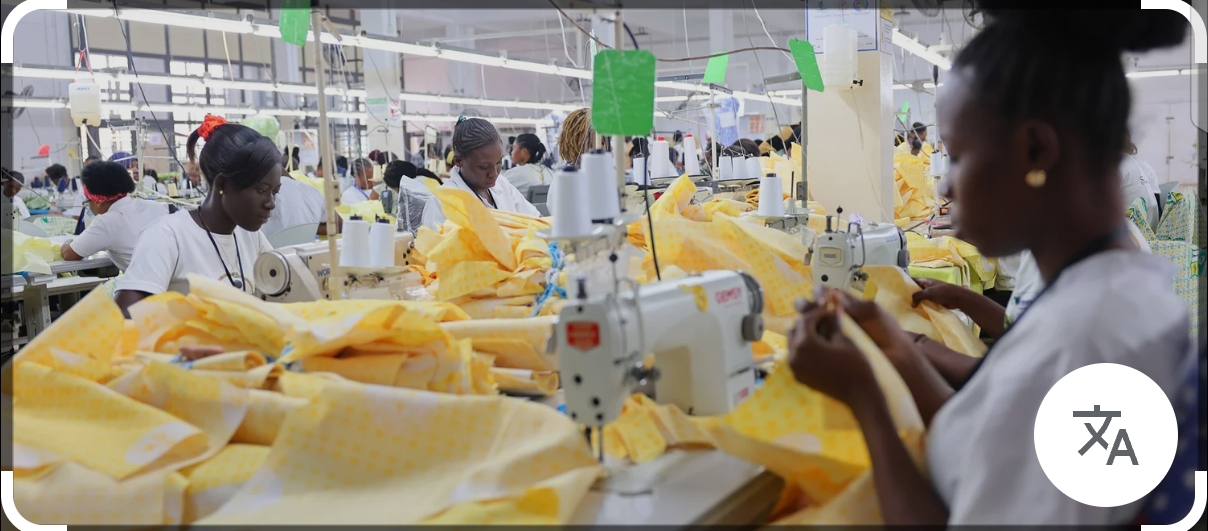
Over a 12-month period, Escape Poverty Africa — in partnership with GIZ and other stakeholders — successfully implemented the Make Fashion Inclusive project in Kumasi to empower persons with disabilities (PWDs) and vulnerable youth with practical, market-driven fashion and entrepreneurship skills.
The project enrolled 140 beneficiaries, with 100 completing intensive training in dressmaking, tailoring, embroidery, beading and millinery. Beyond technical training, participants gained essential business, financial, digital marketing and life skills that prepared them for employment and self-employment.
Persons with disabilities and vulnerable young people in Ghana face persistent barriers to quality skills training, decent work and financial inclusion. The fashion sector — accessible, culturally rooted and commercially vibrant — offers a practical pathway to dignified livelihoods when training is designed to be truly inclusive.
Make Fashion Inclusive combined technical instruction with entrepreneurship, certification and market linkages so that graduates could move directly into self-employment, wage employment or cooperative-led enterprise.
140
Beneficiaries enrolled across persons with disabilities and vulnerable youth.
100
Trainees completed intensive training in dressmaking, tailoring, embroidery, beading and millinery.
95 / 95
Sat and passed the National TVET Proficiency I assessment — a 100% pass rate.
78
Graduates now running their own fashion businesses.
12
Graduates secured formal employment in the fashion industry.
10
Founding members of a new graduate-led fashion cooperative in Kumasi.
August – November 2024 · Asutifi-Asunafo Hotspot Intervention Area, Ghana
From August to November 2024, Escape Poverty Africa partnered with IDH to deliver an interactive radio campaign that helped cocoa farmers better understand climate-smart agriculture, cocoa agroforestry, and tree registration in the Asutifi-Asunafo Hotspot Intervention Area of Ghana.
Over five weeks, we worked closely with the Forestry Commission, COCOBOD, the Cocoa Health Extension Division (CHED), Success FM, Community Information Centres, and local leaders to deliver practical information in a language and format farmers could easily understand.
The project went beyond raising awareness. It helped farmers appreciate the value of agroforestry, understand the realities of climate change, and gain confidence in the tree registration process. By addressing common misconceptions about tree ownership, the programme encouraged greater willingness to adopt sustainable farming practices that protect forests while improving livelihoods.
The positive response from farmers shows that when communities have access to the right information, they are better equipped to make decisions that benefit both their families and the environment.
We are looking for development partners, donors, foundations, corporate sustainability leaders, impact investors, and government institutions to expand this proven model to more cocoa-growing communities across Ghana and Africa — equipping thousands more smallholder farmers with the knowledge and skills to build resilient livelihoods, restore landscapes, and contribute to a more sustainable cocoa sector.
March 2019 – September 2020 · Western, Ashanti, Bono & Ahafo Regions, Ghana
From March 2019 to September 2020, Escape Poverty Africa partnered with Touton SA Ghana to implement the Farm Development Plan (FDP) Programme across the Western, Ashanti, Bono, and Ahafo Regions of Ghana. The FDP is a digital farm planning and advisory programme that helps smallholder cocoa farmers manage their farms as profitable and sustainable businesses.
It equips farmers with practical agronomic knowledge, personalized farm development plans, and business management skills to improve productivity, increase incomes, strengthen climate resilience, and promote long-term investment in cocoa farming. The programme reached 3,500 smallholder cocoa farmers across four cocoa-producing regions.
These achievements show what is possible when inclusion, partnership and innovation come together — yet millions of young people and persons with disabilities across Africa still lack access to quality skills training and economic opportunity.
Escape Poverty Africa is seeking to partner with governments, development agencies, foundations, corporate organisations and impact investors to replicate and scale this proven model across more communities.
A decade of contracted work for bilateral agencies, foundations, and private-sector clients across Ghana.
Nov 2024 – Nov 2025
Training of 100 Persons with Disability (PWDs) and vulnerable youth in fashion skills and establishment of a fashion hub in Kumasi.
Aug – Nov 2024
Education of 15,000 smallholder farmers on cocoa agroforestry and tree registration protocols.
Feb – Jun 2024
Technical assistance on business development, energy sector project and strategy development.
Mar 2019 – Sep 2020
Data collection, training and coaching for 3,500 cocoa farmers across Ashanti, Western, Bono and Ahafo regions.
Jun – Aug 2020
Soil data collection on 150 cocoa farms in major cocoa-growing areas using the LandPKS App.
Jan – Jun 2019
Business Development Services for 5 SME associations covering 150 entrepreneurs to enhance access to finance.
Aug 2018
Research on best practices and mechanisms for access to finance and BDS in the WAGE project operational areas.
May – Jun 2018
Aquaculture project terminal evaluation in the Western Region of Ghana.